
When most people think about improving their coloring experience, they usually focus on buying better pencils. While quality pencils certainly matter, one of the most overlooked tools in any coloring kit is the pencil sharpener.
A good sharpener can make coloring smoother, more enjoyable, and less frustrating. It creates clean, durable points that allow you to color details with confidence. A poor sharpener, on the other hand, can waste expensive pencils, break delicate cores, and leave you constantly stopping to sharpen.
If you’ve ever found yourself wondering why your colored pencils keep breaking, why some pencils sharpen beautifully while others seem impossible to use, or whether an expensive sharpener is actually worth the money, you’re not alone. These are some of the most common questions asked by colorists of all skill levels.
In this guide, we’ll explore the best colored pencil sharpeners available today, the types you should avoid, and how to choose the right sharpener for your coloring style. Whether you’re a beginner, an experienced colorist, or someone who enjoys coloring for relaxation and stress relief, the right sharpener can make a bigger difference than you might think.
Quick Navigation
- Why Your Pencil Sharpener Matters
- What Causes Colored Pencil Tips to Break?
- The Best Colored Pencil Sharpeners
- Sharpeners to Avoid
- Best Sharpeners for Seniors and Arthritis
- Frequently Asked Questions
Why Your Pencil Sharpener Matters More Than You Think
Colored pencils are different from ordinary graphite pencils. Most colored pencils contain either wax-based or oil-based cores that are softer and more fragile than the graphite found in traditional writing pencils. Because of this, they require a sharper, cleaner cutting action during sharpening.
When a sharpener blade becomes dull, it begins tearing the wood instead of slicing through it. This places extra pressure on the colored core and often leads to breakage. Many colorists mistakenly assume their pencils are defective when the real problem is a worn-out or poorly designed sharpener.
A quality sharpener helps preserve your pencils by removing only the amount of wood necessary to create a clean point. This means less waste, fewer broken tips, and a longer lifespan for your art supplies. Over time, investing in a good sharpener can actually save money by helping your pencils last longer.
The difference becomes even more noticeable when using premium pencils such as Prismacolor Premier, Faber-Castell Polychromos, Derwent Coloursoft, or Caran d’Ache. These pencils are designed to perform beautifully, but they often reveal the weaknesses of low-quality sharpeners very quickly.
What Causes Colored Pencil Tips to Break?
One of the most frustrating experiences in coloring is sharpening a pencil only to watch the tip break repeatedly. While this problem can have several causes, the sharpener is often the first place to investigate.
A dull blade is one of the most common culprits. Instead of cutting cleanly, it places stress on the wood casing and colored core, creating fractures that cause the tip to snap. If several pencils from different brands are breaking in the same sharpener, the sharpener itself is usually to blame.
Another common cause is internal core damage. Colored pencils can develop tiny cracks inside the pigment core if they are dropped or stored improperly. These cracks may not be visible from the outside, but they can cause repeated breakage during sharpening.
Heat can also affect colored pencils. Leaving pencils in a hot vehicle, near a heater, or in direct sunlight can soften the core and make it more susceptible to damage. In some cases, the issue may even be a manufacturing defect, though this is far less common than problems caused by sharpening.
Before replacing an entire set of pencils, it’s worth examining the sharpener. In many cases, switching to a better sharpener solves the problem immediately.
The Best Colored Pencil Sharpeners for Most Colorists
There are dozens of sharpeners on the market, but only a handful consistently earn praise from the coloring community. The following sharpeners have developed strong reputations for producing clean points while minimizing breakage and pencil waste.
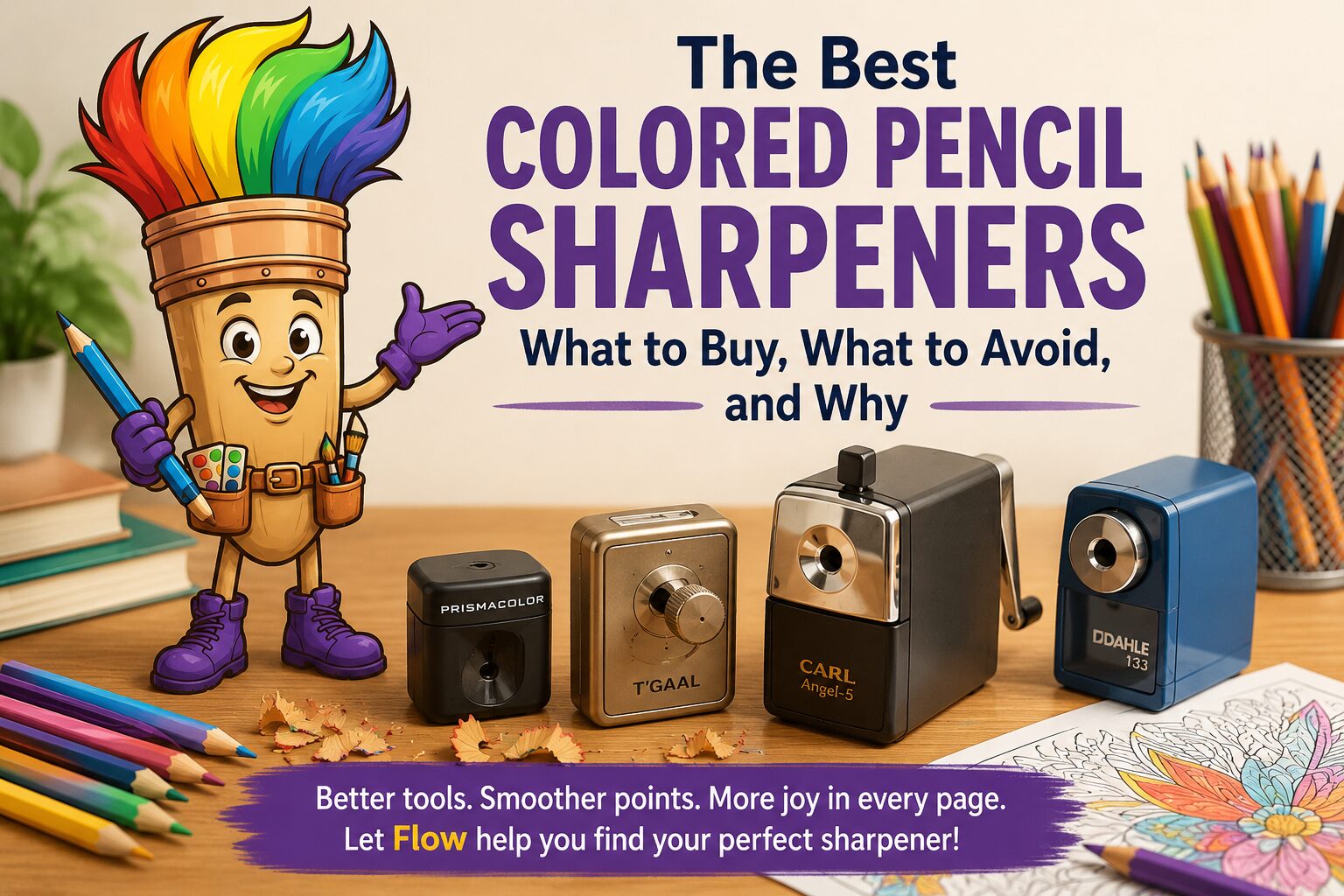
Prismacolor Premier Pencil Sharpener
The Prismacolor Premier Sharpener has been a favorite among adult colorists for years. Designed specifically for soft-core colored pencils, it creates a fine point without being overly aggressive.
Its compact size makes it easy to keep in a coloring bag or pencil case, and the built-in shavings container helps keep your workspace tidy. While the blade eventually wears out, the sharpener’s affordable price makes replacement easy.
For colorists who primarily use Prismacolor pencils or other soft-core brands, this remains one of the safest and most reliable choices available.
T’GAAL Adjustable Pencil Sharpener
The T’GAAL Adjustable Sharpener is popular because it gives colorists more control over the type of point they create. Instead of forcing every pencil into the same sharpening angle, it allows you to choose a shorter or longer point depending on your needs.
This is especially helpful if you switch between large open coloring areas and smaller detailed sections. A shorter point can be stronger and less likely to break, while a longer point can help with fine details and small spaces.
The T’GAAL may take a little experimenting at first, but once you find the setting that works best for your pencils, it can become one of the most useful tools in your coloring kit.
Carl Angel-5 Hand-Crank Sharpener
The Carl Angel-5 Hand Crank Sharpener is often recommended by experienced colorists because it sharpens smoothly and consistently. Instead of twisting the pencil by hand, you place the pencil into the sharpener and turn a crank.
This makes the sharpening process easier on the hands and wrists, especially during longer coloring sessions. It also tends to waste less pencil than many cheap handheld sharpeners.
For frequent colorists, seniors, or anyone who experiences hand discomfort, the Carl Angel-5 is one of the best upgrades you can make.
Dahle 133 Pencil Sharpener
The Dahle 133 is a premium desktop sharpener known for precision and durability. It is not the cheapest option, but it is built for people who want consistent sharpening and long-term reliability.
Because it is a desktop sharpener, it is better suited for a dedicated coloring space rather than travel. If you keep your coloring supplies at a desk or table, this can be a dependable choice.
For serious colorists who use colored pencils regularly, a high-quality desktop sharpener like the Dahle 133 can help reduce frustration and protect expensive pencils.
Sharpeners to Avoid
Not every pencil sharpener is a good choice for colored pencils. Some sharpeners are perfectly fine for standard graphite pencils but too rough for soft colored cores.
Cheap Dollar Store Sharpeners
Cheap sharpeners may seem harmless, but many have low-quality blades that dull quickly. Instead of cleanly shaving the wood, they can tear and splinter it, placing stress on the colored core inside.
This often leads to broken tips, uneven points, and wasted pencil. While the sharpener itself may only cost a dollar or two, it can shorten the life of much more expensive colored pencils.
Old School Metal Sharpeners
Many people still have small metal sharpeners from school or office drawers. Some of them work reasonably well, but many were designed for graphite pencils rather than colored pencils.
If your pencil points keep snapping or the wood looks rough after sharpening, that old sharpener may be doing more harm than good.
Generic Electric Sharpeners
Electric sharpeners can be convenient, especially for people with limited hand strength. However, not all electric sharpeners are gentle enough for colored pencils.
Some models remove too much material too quickly, which can waste pigment and increase breakage. If you choose an electric sharpener, look for one that specifically says it works well with colored pencils.
Best Pencil Sharpeners for Seniors and People with Arthritis
At ColoringForHealing, many readers enjoy coloring as a calming and creative activity. For seniors or people with arthritis, hand weakness, or reduced grip strength, the sharpener should make coloring easier, not harder.
Small handheld sharpeners can be difficult because they require repeated twisting and gripping. This can become uncomfortable during longer coloring sessions, especially if several pencils need sharpening.
Hand-crank sharpeners, such as the Carl Angel-5, are often more comfortable because they require less twisting force. A quality electric sharpener may also be helpful, as long as it is gentle enough for colored pencils.
The best sharpener is not always the sharpest or most expensive one. For many colorists, the best sharpener is the one that reduces frustration, feels comfortable to use, and helps keep coloring relaxing.
Image suggestion: Add a second image here showing Flow using a hand-crank sharpener.
Manual vs. Electric Sharpeners
Manual sharpeners give you more control and are often safer for delicate colored pencil cores. They are usually portable, affordable, and easy to replace when the blade wears out.
Electric sharpeners are faster and require less hand strength, which can be helpful for seniors or people with arthritis. The downside is that some models are too aggressive and may remove more pencil than necessary.
If you color occasionally, a good handheld or adjustable sharpener may be all you need. If you color often or struggle with hand pain, a hand-crank or gentle electric sharpener may be a better investment.
How to Make Your Colored Pencils Last Longer
A good sharpener helps, but pencil care also matters. Colored pencils can become damaged if they are dropped, stored loosely in a bag, or exposed to heat.
Try to store pencils in a case, tray, or organizer where they will not roll off the table. Avoid leaving them in hot cars, sunny windows, or near heaters. Heat can soften the core and make sharpening more difficult.
It also helps to stop sharpening as soon as the pencil has the point you need. Over-sharpening creates fragile tips and wastes pigment. For large coloring areas, a shorter point is often better than a long needle-like point.
Frequently Asked Questions About Colored Pencil Sharpeners
Why do my Prismacolor pencils keep breaking?
Prismacolor Premier pencils have soft wax-based cores, which makes them smooth and richly pigmented but also more fragile. If they keep breaking, the issue may be a dull sharpener, internal core damage from being dropped, or too much pressure during sharpening.
Is an expensive pencil sharpener worth it?
For regular colorists, yes. A better sharpener can reduce breakage, waste less pencil, and make coloring more enjoyable. You do not always need the most expensive model, but very cheap sharpeners often cause more problems than they solve.
What is the best sharpener for beginners?
For beginners, a Prismacolor Premier Sharpener or T’GAAL Adjustable Sharpener is a good place to start. Both are affordable, easy to use, and work well for many common colored pencil brands.
What sharpener is easiest for seniors?
Many seniors prefer a hand-crank sharpener because it requires less twisting and gripping than a small handheld sharpener. The Carl Angel-5 is a popular choice because it is smooth, consistent, and easier on the hands.
Can a bad sharpener ruin colored pencils?
A bad sharpener can absolutely shorten the life of colored pencils. Dull or poorly made blades can crack the core, splinter the wood, and waste pigment. If your pencils keep breaking, try a better sharpener before assuming the pencils are defective.
Final Thoughts
A pencil sharpener may seem like a small tool, but it can make a big difference in your coloring experience. The right sharpener helps protect your pencils, creates cleaner points, and reduces the frustration of constant breakage.
For most colorists, the T’GAAL Adjustable Sharpener is a strong all-around choice. For seniors, frequent colorists, or anyone with hand discomfort, a hand-crank sharpener like the Carl Angel-5 may be even better.
Coloring should feel peaceful, creative, and enjoyable. When your tools work with you instead of against you, it becomes much easier to relax and enjoy the simple pleasure of bringing a page to life with color.
Related Articles
- Best Colored Pencils for Adult Coloring Books
- How to Choose Colors for Your Coloring Pages
- Beginner Shading Techniques for Coloring Books
- How to Prevent Marker Bleed-Through in Coloring Books